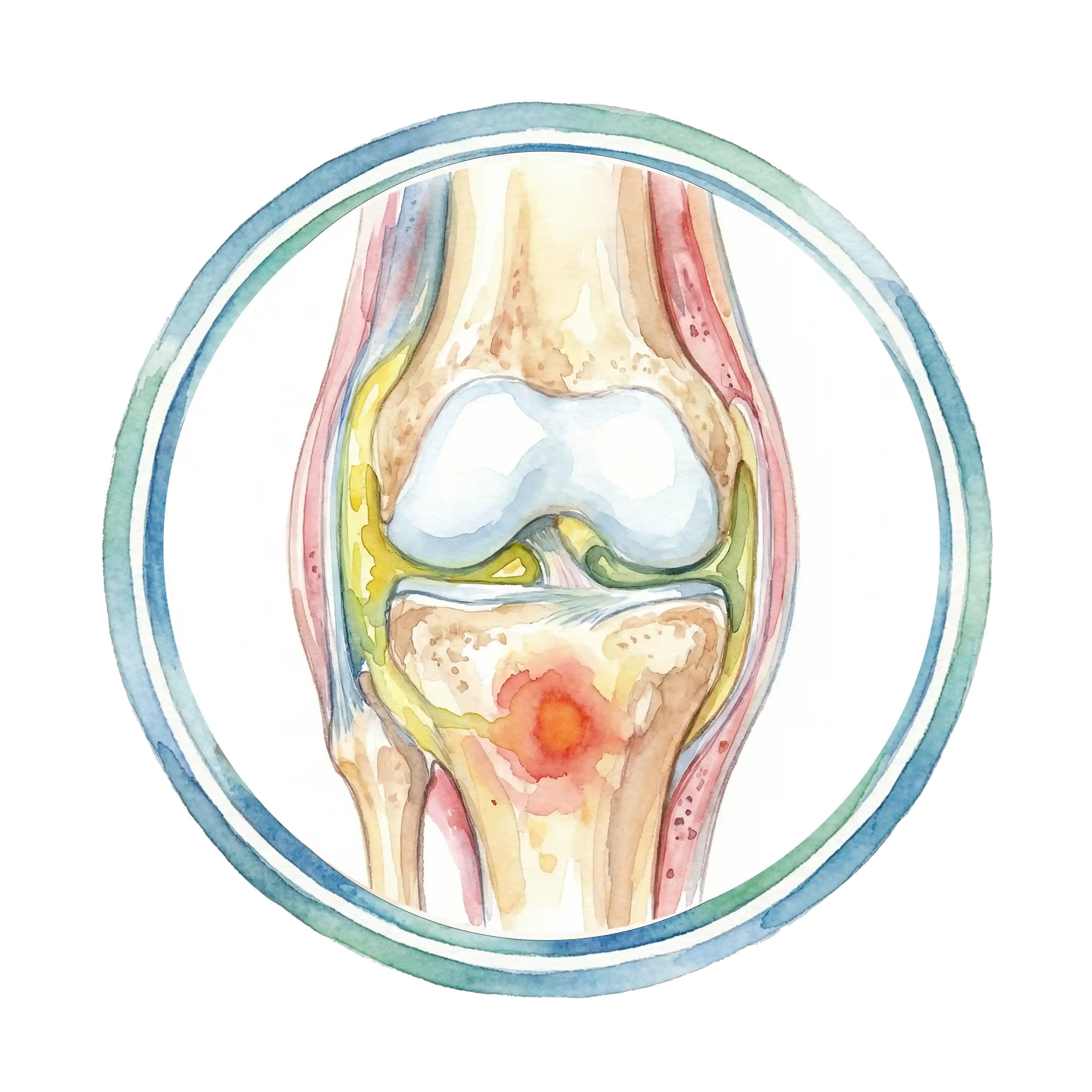
Best Septic Arthritis Treatment in Indore (सेप्टिक आर्थराइटिस)
Septic Arthritis Treatment
Joint Infection का विशेषज्ञ इलाज - Emergency Drainage, Antibiotics, Complete Recovery | Indore & Bhopal
Expert Joint Infection Treatment - Emergency Drainage, Antibiotics, Complete Recovery | Indore & Bhopal
सेप्टिक आर्थराइटिस क्या है?
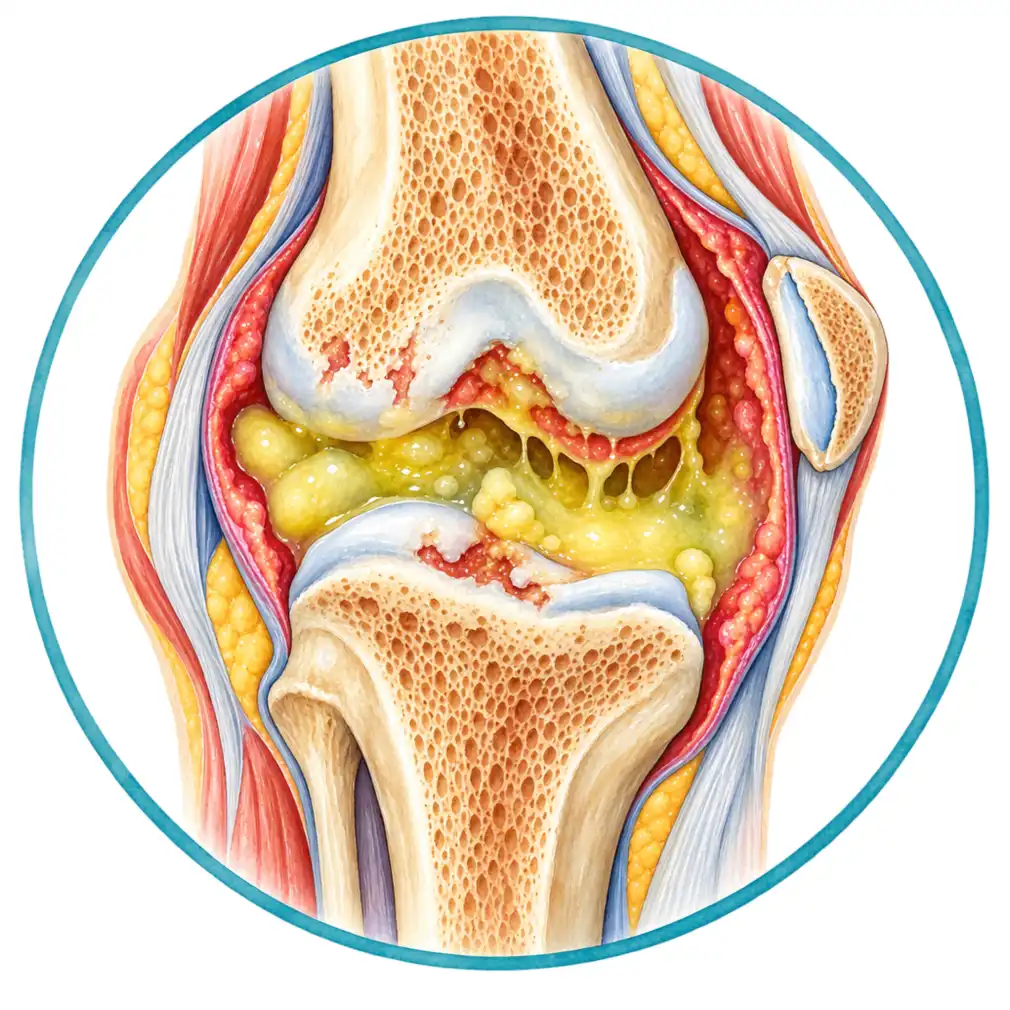
What is Septic Arthritis?
Septic Arthritis एक serious joint infection है जहां bacteria joint के अंदर चला जाता है और infection फैलाता है। यह especially बच्चों में common है और बहुत तेज़ी से progress करता है।
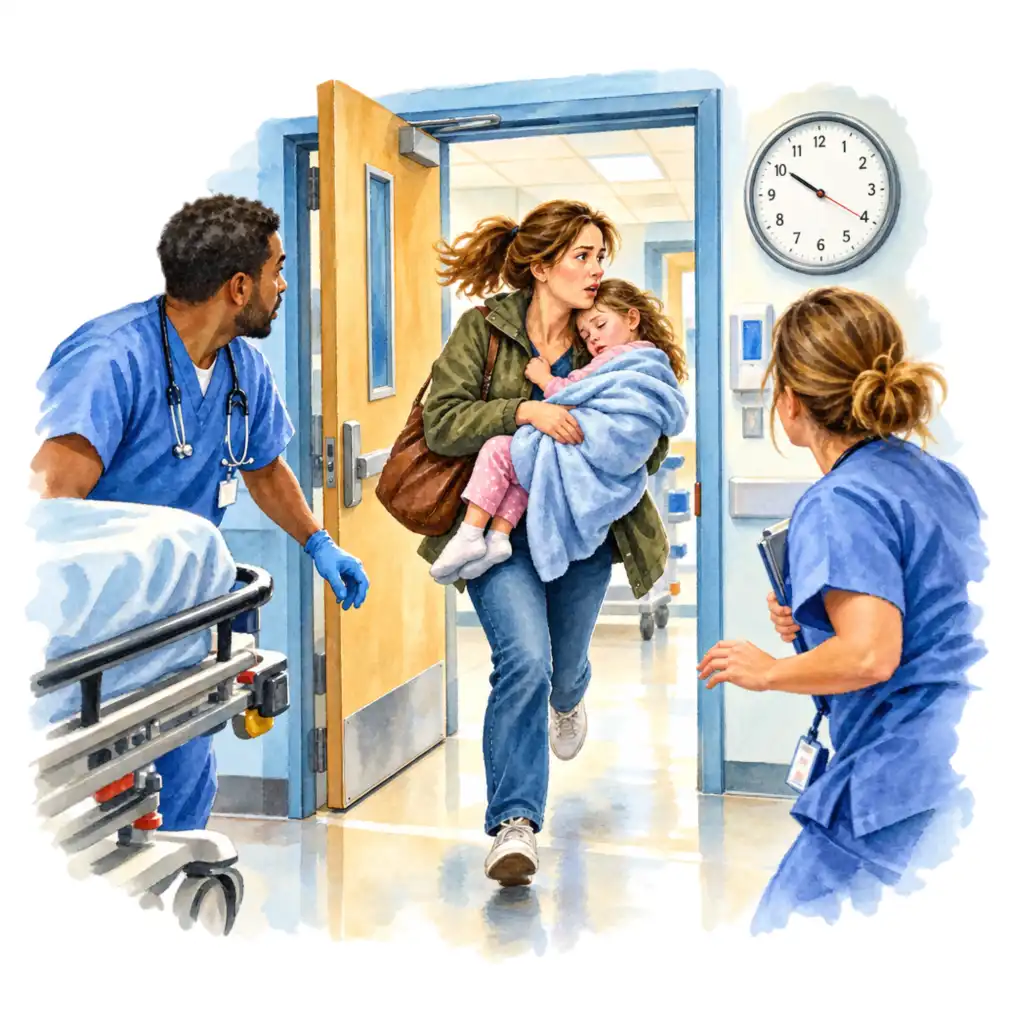
🚨 मेडिकल इमरजेंसी!
6-8 घंटे के अंदर treatment ज़रूरी है! Delay से joint को permanent damage हो सकता है। यह एक true orthopedic emergency है जिसमें immediate action लेना पड़ता है।
बैक्टीरियल इन्फेक्शन
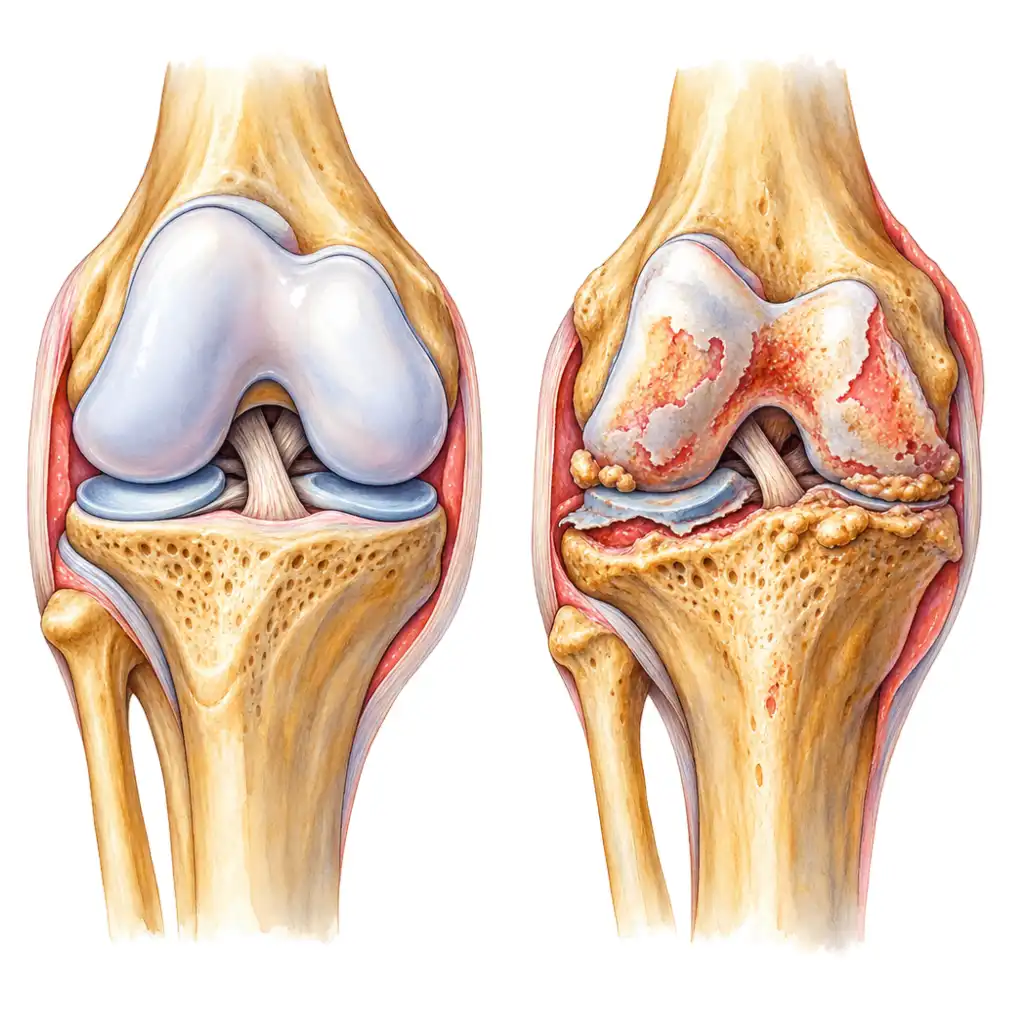
Joint में bacteria enter करके pus (मवाद) जमा करते हैं जो cartilage और bone को damage करता है।
समय अत्यंत महत्वपूर्ण
हर घंटे की देरी से permanent damage का risk बढ़ता है। Golden period: पहले 6-8 घंटे।
बच्चे सबसे अधिक प्रभावित
0-5 साल के बच्चों में सबसे ज़्यादा common। Their immune system developing stage में होती है।
जोड़ क्षति का जोखिम
Untreated infection से permanent joint damage, arthritis, और disability हो सकती है।
💡 मुख्य तथ्य
✓ Most common: Knee joint (40-50% cases)
✓ Caused by: Staphylococcus aureus (सबसे common bacteria)
✓ Risk: छोटे बच्चे, weak immune system, recent infection/injury
✓ Treatment: Emergency drainage + IV antibiotics
✓ Recovery: 100% possible with timely treatment!
Septic Arthritis is a serious joint infection where bacteria enter the joint space and cause infection. It's especially common in children and progresses very rapidly.
🚨 Medical Emergency!
Treatment required within 6-8 hours! Delay can cause permanent joint damage. This is a true orthopedic emergency requiring immediate action.
Bacterial Infection
Bacteria enter the joint and create pus that damages cartilage and bone tissue.
Time Critical
Every hour of delay increases risk of permanent damage. Golden period: first 6-8 hours.
Children Most Affected
Most common in children under 5 years. Their immune system is still developing.
Joint Damage Risk
Untreated infection can lead to permanent joint damage, arthritis, and disability.
💡 Key Facts
✓ Most common: Knee joint (40-50% of cases)
✓ Caused by: Staphylococcus aureus (most common bacteria)
✓ Risk factors: Young children, weak immune system, recent infection/injury
✓ Treatment: Emergency drainage + IV antibiotics
✓ Recovery: 100% possible with timely treatment!
लक्षण - कैसे पहचानें?
ये signs immediately notice करने चाहिए
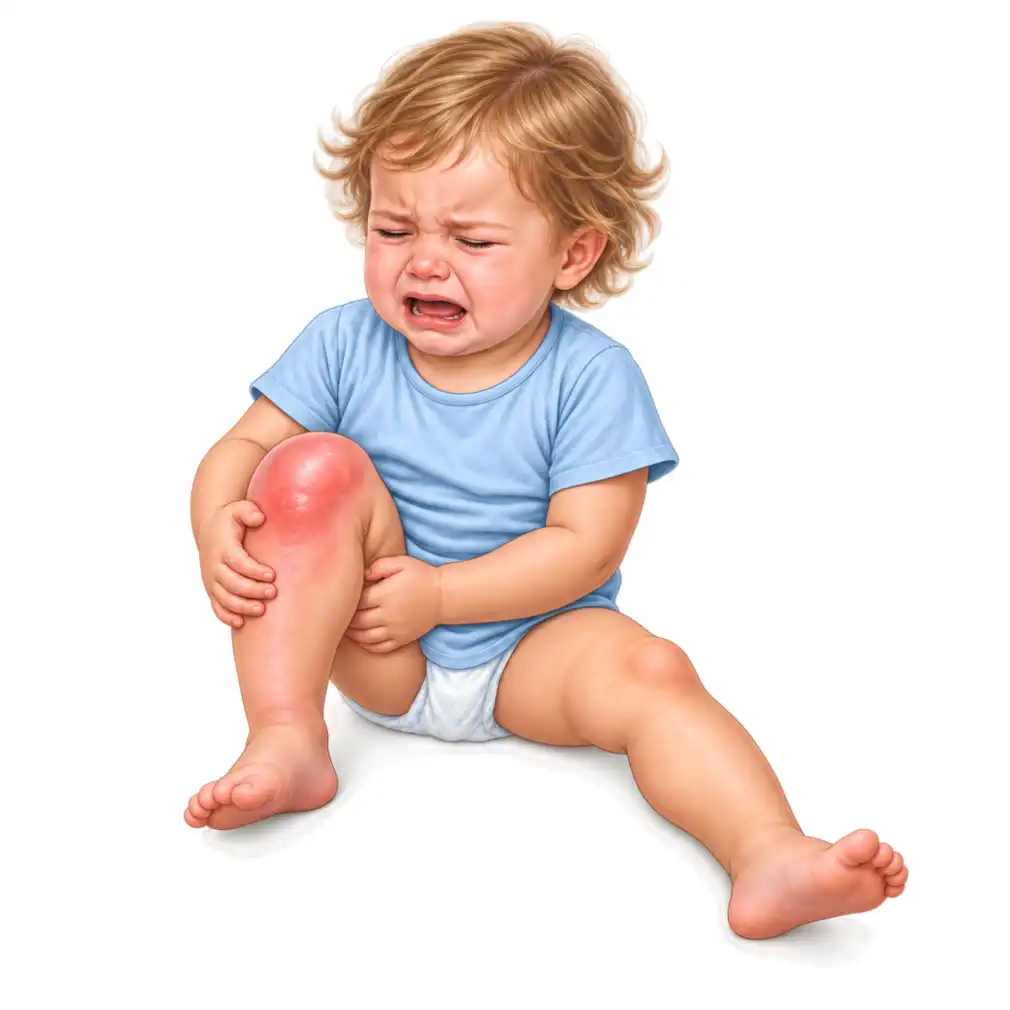
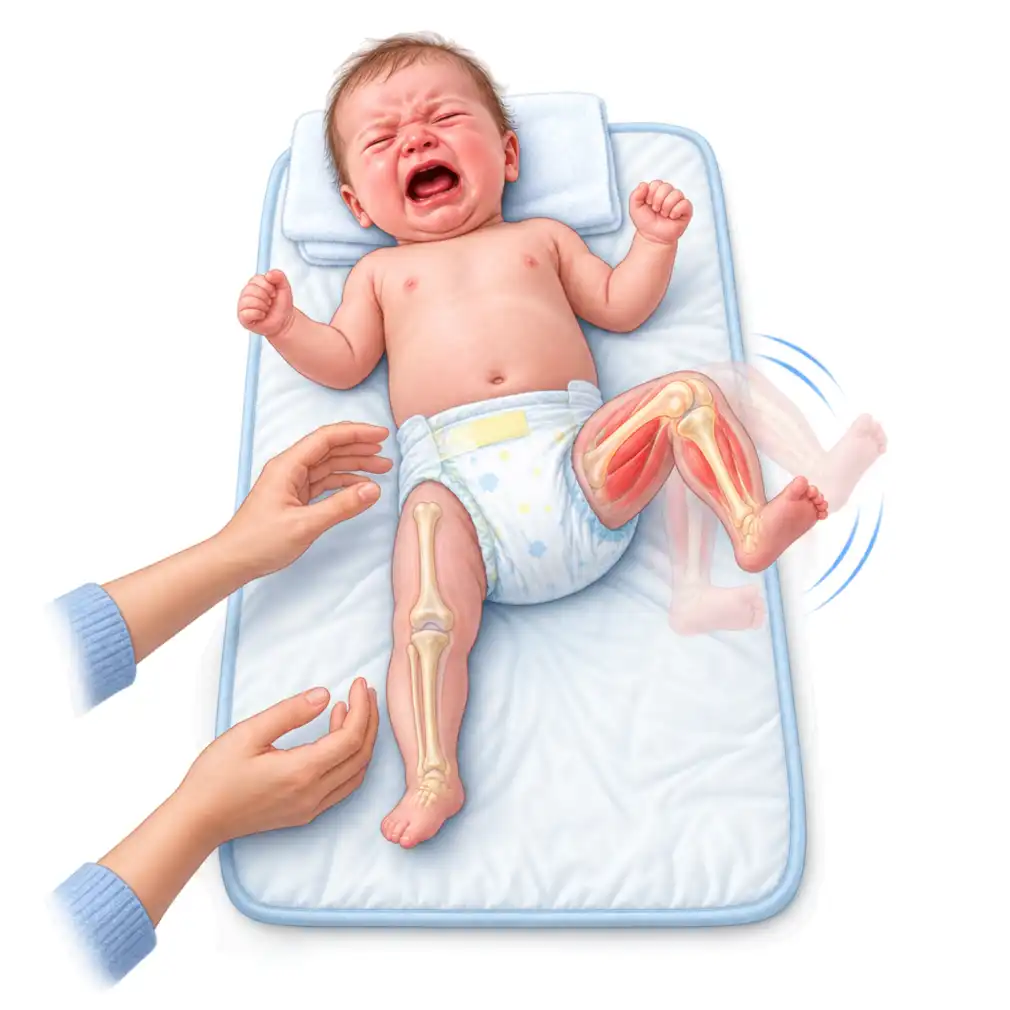
Symptoms - How to Recognize?
These signs require immediate attention
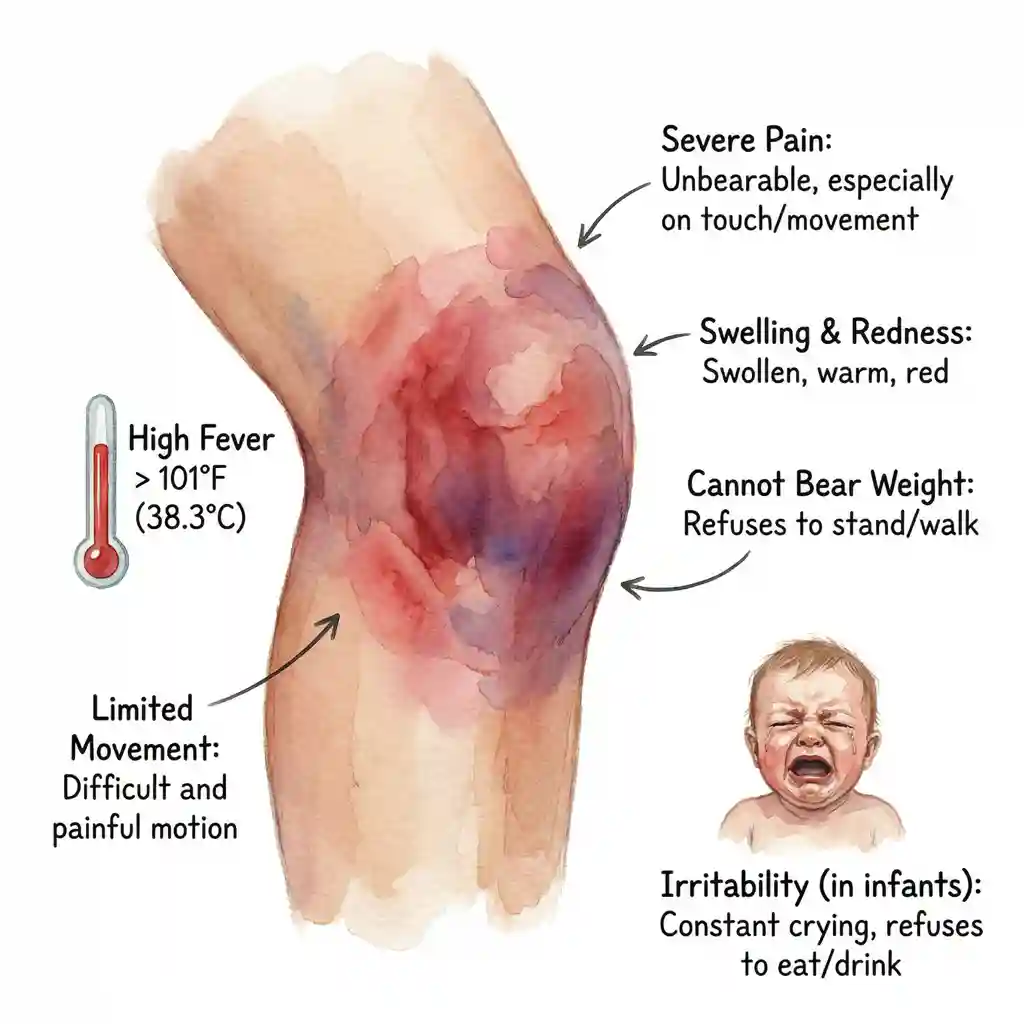
High Fever (तेज़ बुखार)
101°F (38.3°C) से ज़्यादा बुखार, अचानक आता है और high grade होता है।
Severe Pain (तेज़ दर्द)
Joint में असहनीय दर्द - छूने पर या हिलाने पर बहुत तेज़ दर्द होता है।
Swelling & Redness
Joint सूज जाता है, गर्म हो जाता है, और लाल दिखता है।
Cannot Bear Weight
Baccha affected leg पर खड़ा नहीं हो पाता, चलने से मना करता है।
Limited Movement
Joint को हिलाना बहुत मुश्किल और दर्दनाक - range of motion कम हो जाता है।
Irritability (छोटे बच्चों में)
Baccha बहुत चिड़चिड़ा हो जाता है, रोता रहता है, खाना-पीना छोड़ देता है।
⚠️ तुरंत डॉक्टर को दिखाएं अगर:
✓ बच्चे को अचानक तेज़ बुखार आए और joint में दर्द हो
✓ Joint सूज जाए, लाल हो जाए, या गर्म महसूस हो
✓ बच्चा चलने से मना करे या affected limb use न करे
✓ Joint को छूने पर तेज़ दर्द या रोना
✓ कोई भी injury या infection के बाद ये symptoms
High Fever
Sudden high-grade fever above 101°F (38.3°C).
Severe Pain
Unbearable joint pain - very severe on touching or moving the joint.
Swelling & Redness
Joint becomes swollen, warm to touch, and appears red.
Cannot Bear Weight
Child refuses to stand on affected leg or walk.
Limited Movement
Moving the joint is very difficult and painful - reduced range of motion.
Irritability (in infants)
Child becomes very irritable, cries constantly, refuses to eat/drink.
⚠️ See a Doctor Immediately If:
✓ Child has sudden high fever with joint pain
✓ Joint becomes swollen, red, or warm
✓ Child refuses to walk or use affected limb
✓ Severe pain or crying when joint is touched
✓ These symptoms after any injury or infection
निदान कैसे होता है?
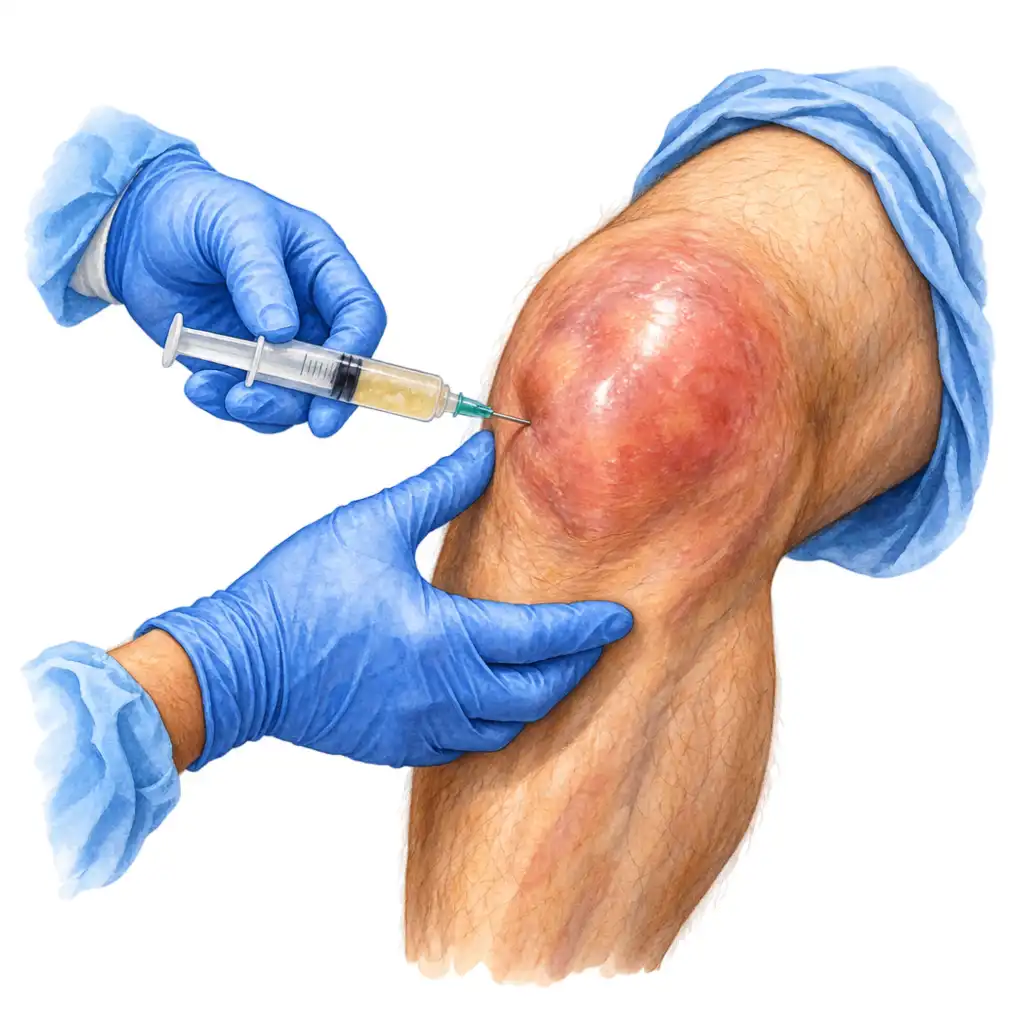
How is it Diagnosed?
Dr. Gaurav Jain thorough examination और कई tests से confirm करते हैं:
1. शारीरिक जांच
Joint को carefully check - swelling, redness, warmth, range of motion देखते हैं।
2. ब्लड टेस्ट
WBC count, ESR, CRP levels - infection के markers check करते हैं।
3. जोड़ के तरल पदार्थ का विश्लेषण ⭐
सबसे important! Joint से fluid निकालकर lab में test - bacteria identify करने के लिए।
4. इमेजिंग (एक्स-रे/अल्ट्रासाउंड)
Joint damage देखने और other problems rule out करने के लिए।
5. कल्चर और संवेदनशीलता परीक्षण
कौन सा bacteria है और कौन सी antibiotic काम करेगी - यह पता लगाते हैं।
💡 त्वरित निदान का महत्व
हर घंटे की देरी से joint damage का risk बढ़ता है। इसलिए हम immediately tests शुरू करते हैं। Golden period: पहले 6-8 घंटे!
Dr. Gaurav Jain performs thorough examination and confirmatory tests:
1. Physical Examination
Careful joint assessment - swelling, redness, warmth, range of motion.
2. Blood Tests
WBC count, ESR, CRP levels - checking infection markers.
3. Joint Fluid Analysis ⭐
Most important! Extracting joint fluid for lab testing - to identify bacteria.
4. Imaging (X-ray/Ultrasound)
To assess joint damage and rule out other problems.
5. Culture & Sensitivity
Identifying the bacteria and which antibiotic will work best.
💡 Importance of Quick Diagnosis
Every hour of delay increases risk of joint damage. That's why we start tests immediately. Golden period: first 6-8 hours!
इलाज कैसे होता है?
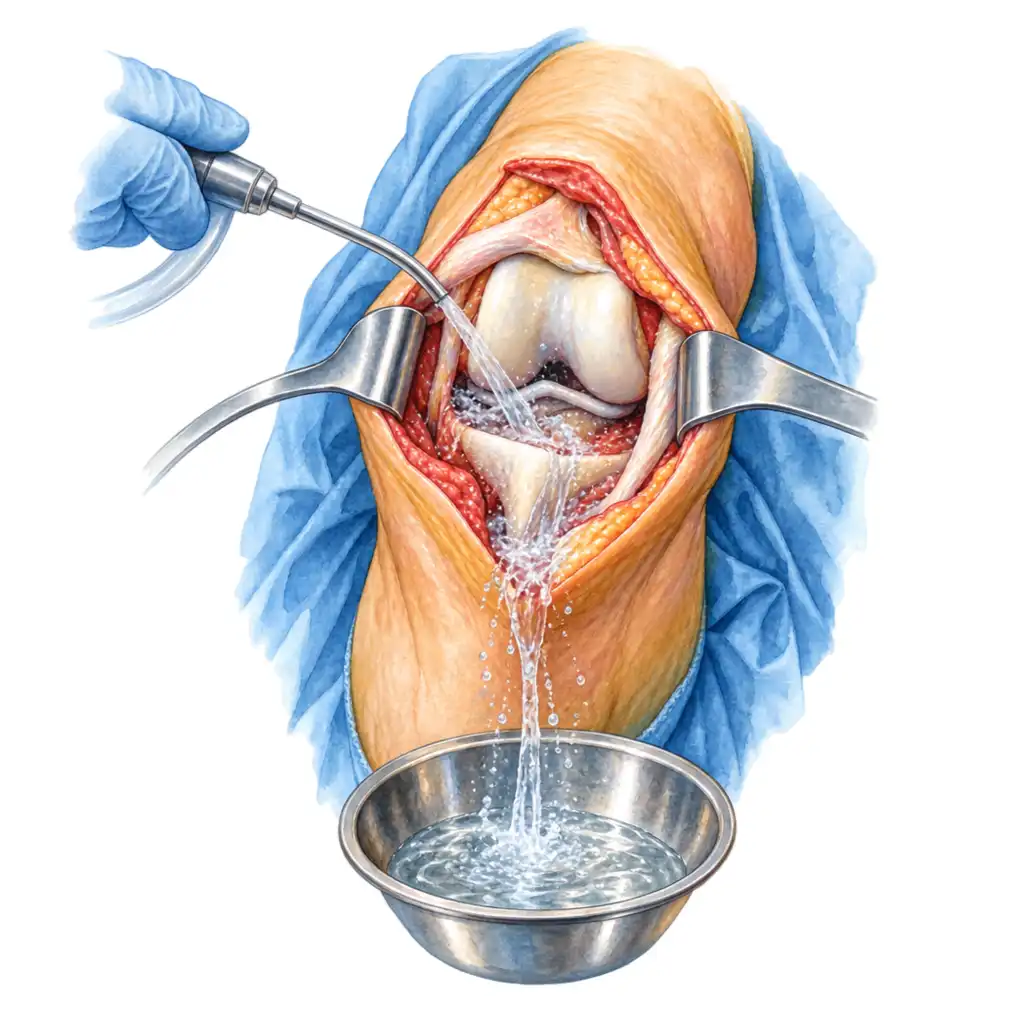
How is it Treated?
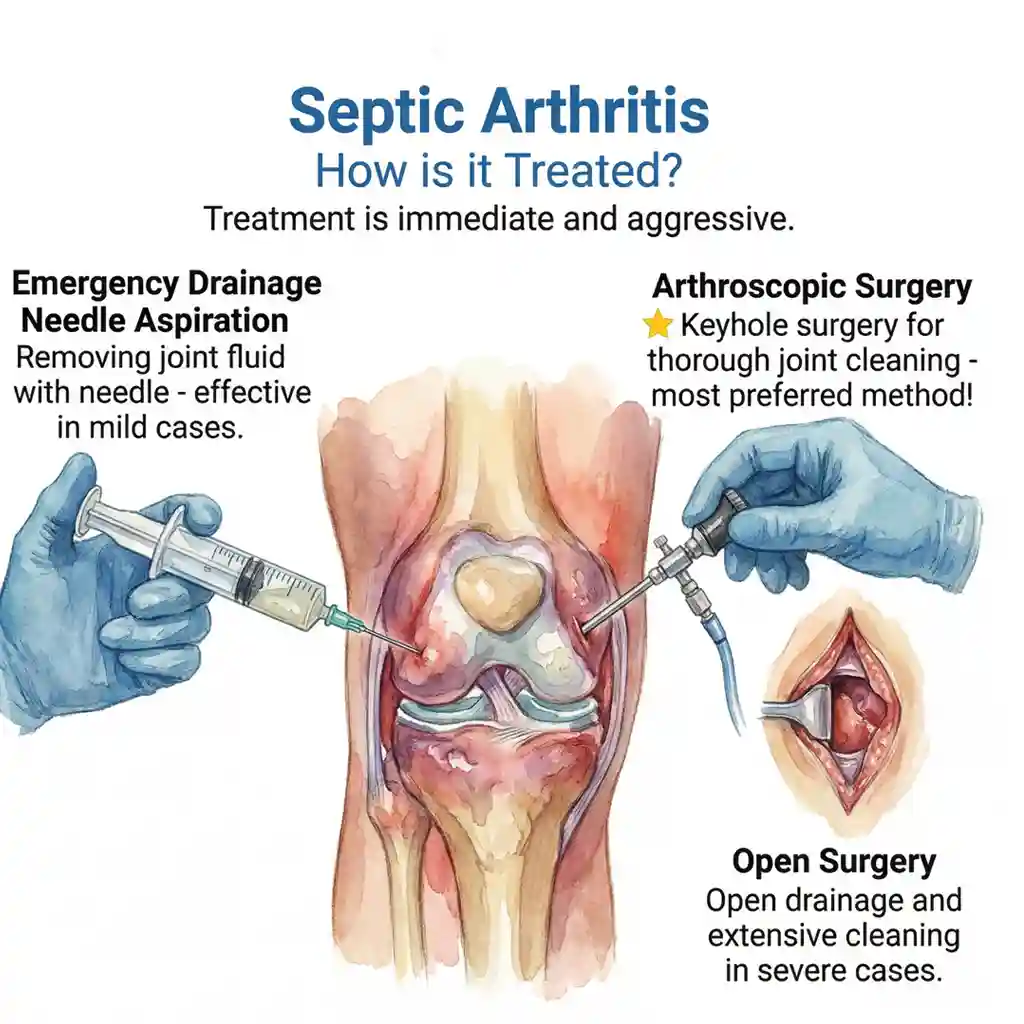
Treatment immediate और aggressive होता है। Dr. Gaurav Jain comprehensive approach follow करते हैं:
1️⃣ इमरजेंसी ड्रेनेज (तुरंत जोड़ खाली करना)
सुई द्वारा निकालना
Needle से joint fluid निकालना - mild cases में effective।
आर्थ्रोस्कोपिक सर्जरी ⭐
Keyhole surgery से joint thoroughly clean - most preferred method!
ओपन सर्जरी
Severe cases में open drainage और extensive cleaning।
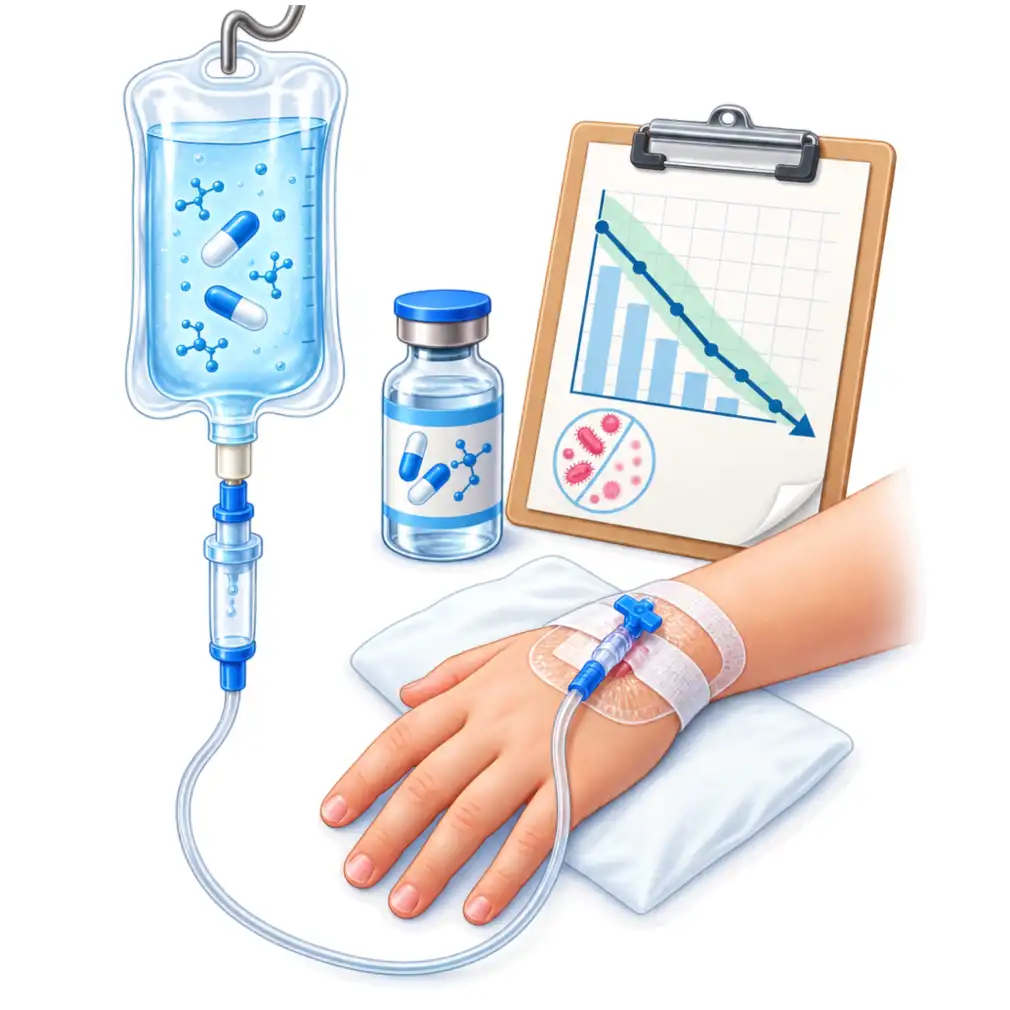
2️⃣ एंटीबायोटिक थेरेपी
IV Antibiotics तुरंत शुरू - पहले broad-spectrum, फिर culture results के according specific। Usually 4-6 weeks antibiotics चलती हैं।
3️⃣ अस्पताल में भर्ती
Initial कुछ दिन hospital में:
✓ IV antibiotics continuous
✓ Joint monitoring regularly
✓ Pain management
✓ Repeat drainage if needed
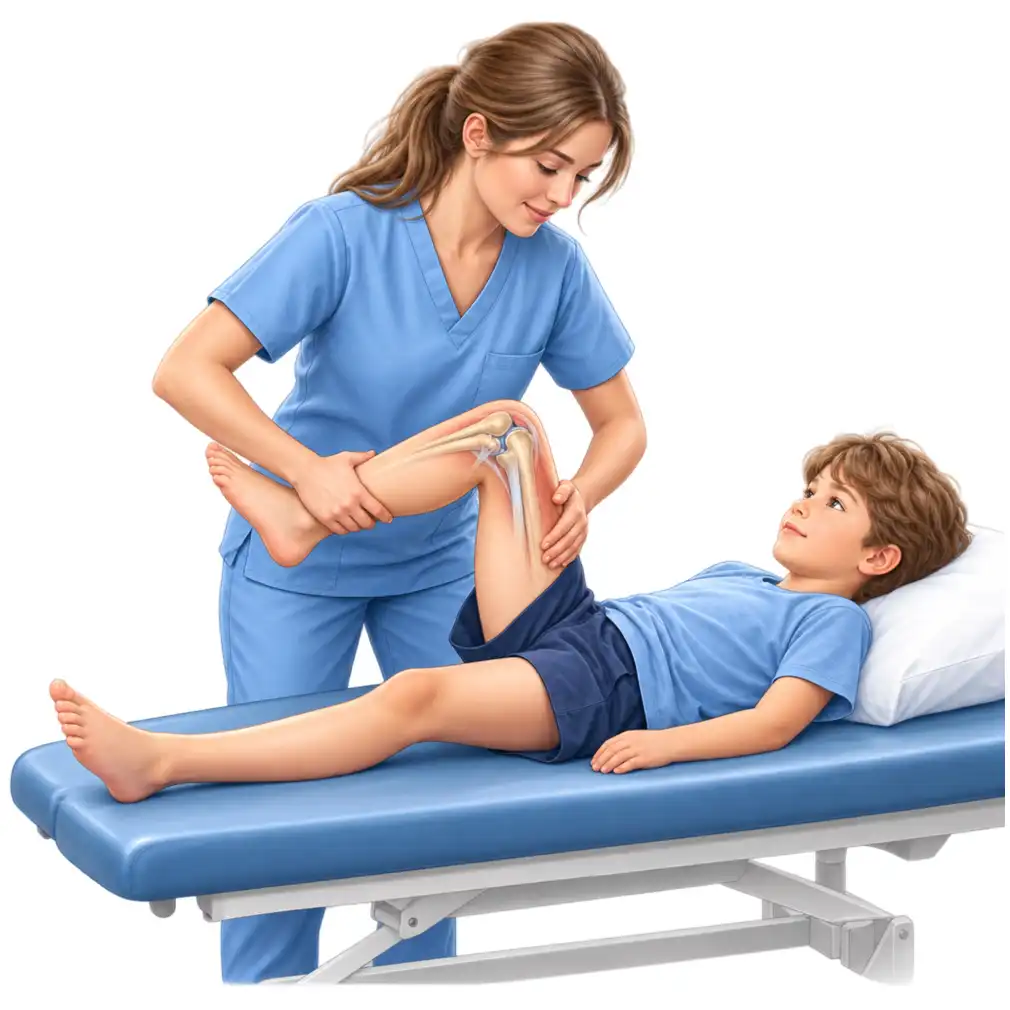
4️⃣ फिजियोथेरेपी
Infection control के बाद joint की strength और movement restore करने के लिए।
✅ इलाज की सफलता दर
24-48 घंटे के अंदर proper treatment मिले तो ज़्यादातर बच्चे completely recover हो जाते हैं! Dr. Gaurav Jain की expertise से recovery rate बहुत high है।
Treatment is immediate and aggressive. Dr. Gaurav Jain follows a comprehensive approach:
1️⃣ Emergency Drainage
Needle Aspiration
Removing joint fluid with needle - effective in mild cases.
Arthroscopic Surgery ⭐
Keyhole surgery for thorough joint cleaning - most preferred method!
Open Surgery
Open drainage and extensive cleaning in severe cases.
2️⃣ Antibiotic Therapy
IV Antibiotics started immediately - first broad-spectrum, then specific based on culture. Usually 4-6 weeks of antibiotics required.
3️⃣ Hospitalization
Initial days in hospital:
✓ Continuous IV antibiotics
✓ Regular joint monitoring
✓ Pain management
✓ Repeat drainage if needed
4️⃣ Physiotherapy
After infection control, restoring joint strength and movement.
✅ Treatment Success Rate
With proper treatment within 24-48 hours, most children recover completely! Dr. Gaurav Jain's expertise ensures very high recovery rates.
वीडियो – सेप्टिक आर्थराइटिस की जानकारी
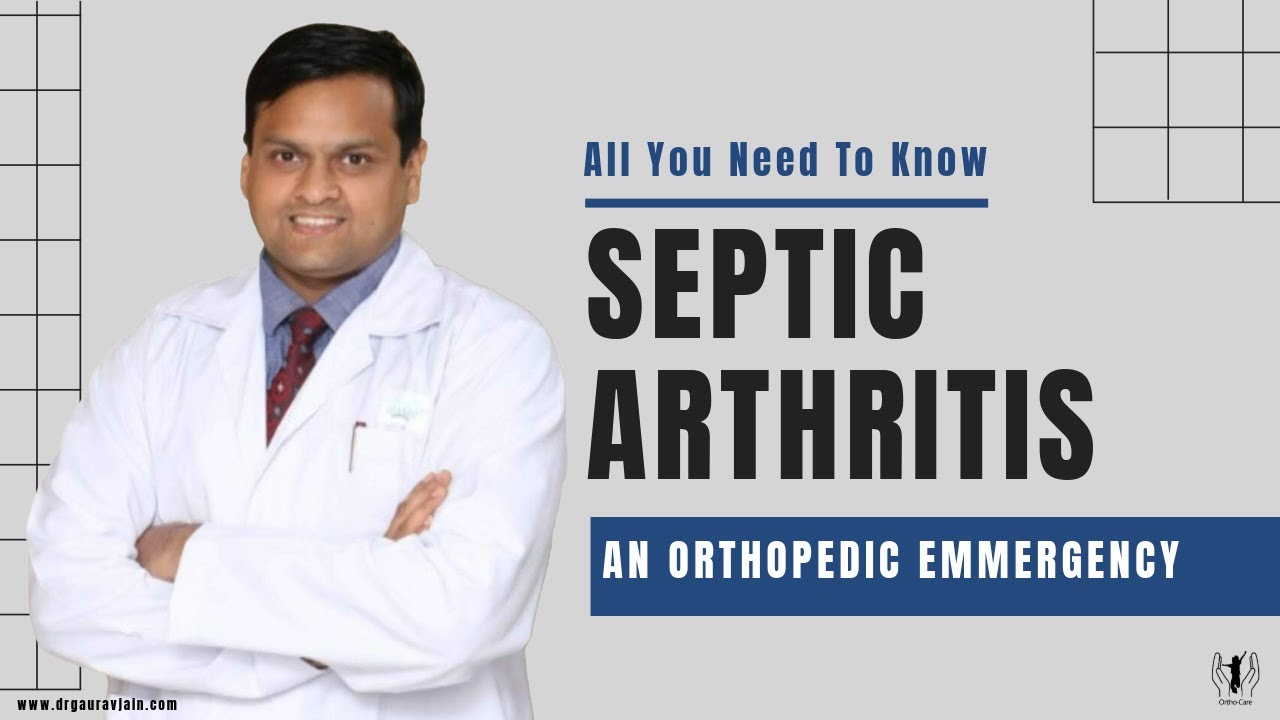
Septic Arthritis : All You Need to Know
बच्चों में सेप्टिक आर्थराइटिस के बारे में सब कुछ समझें – कारण, जांच और इलाज – डॉ. गौरव जैन द्वारा।
Everything you need to know about Septic Arthritis in children — causes, evaluation and treatment options — explained by Dr. Gaurav Jain.
अक्सर पूछे जाने वाले सवाल
Frequently Asked Questions
Septic arthritis ek serious joint infection hai jahan bacteria joint ke andar chale jaate hain। Yeh ek medical emergency hai kyunki agar 6-8 hours ke andar treatment shuru na ho to joint ko permanent damage ho sakta hai। बच्चों में यह especially common hai aur बहुत तेज़ी से progress करता है।
Septic arthritis is a serious joint infection where bacteria enter the joint space. It's a medical emergency because if treatment doesn't start within 6-8 hours, the joint can suffer permanent damage. It's especially common in children and progresses very rapidly.
Main symptoms: तेज़ बुखार (101°F+), severe joint pain, joint swelling और redness, affected limb par weight nahi rakh pana, joint ko hilane mein dikkat, छोटे बच्चे bahut चिड़चिड़े hो जाते hain। Agar yeh symptoms dikhen to turant doctor ko dikhana chahiye!
Main symptoms: High fever (101°F+), severe joint pain, joint swelling and redness, inability to bear weight on affected limb, difficulty moving joint, infants become very irritable. If these symptoms appear, see a doctor immediately!
Haan, yeh medical emergency hai! First 6-8 hours बहुत critical होते हैं। इस time में treatment शुरू हो जाए तो joint को permanent damage से बचाया जा सकता है। 24-48 घंटों की delay भी serious complications ला सकती है।
Yes, this is a medical emergency! The first 6-8 hours are very critical. If treatment starts in this window, the joint can be saved from permanent damage. Even 24-48 hours delay can lead to serious complications.
Treatment में तीन main steps: (1) Emergency drainage - joint से infected fluid निकालना (arthroscopic surgery best hai), (2) IV antibiotics - immediately शुरू करते hैं, 4-6 weeks चलती hैं, (3) Hospitalization - कुछ दिन hospital में monitoring के liye। Dr. Gaurav Jain comprehensive approach follow करते hैं।
Treatment has three main steps: (1) Emergency drainage - removing infected fluid from joint (arthroscopic surgery is best), (2) IV antibiotics - started immediately, continued for 4-6 weeks, (3) Hospitalization - few days in hospital for monitoring. Dr. Gaurav Jain follows a comprehensive approach.
ज़्यादातर cases में haan, surgical drainage zaroori hai। Yeh joint को thoroughly clean karne ka सबसे effective way है। हम usually arthroscopic surgery prefer करते hैं - keyhole surgery jo less invasive है aur recovery भी faster होती hai।
In most cases, yes, surgical drainage is necessary. It's the most effective way to thoroughly clean the joint. We usually prefer arthroscopic surgery - a keyhole procedure that's less invasive and has faster recovery.
5 साल से कम उम्र के बच्चों में सबसे ज़्यादा common है, especially 0-2 साल की age group में। हालांकि यह किसी भी age में हो सकता है, लेकिन छोटे बच्चों में risk ज़्यादा होता है।
Most common in children under 5 years, especially in the 0-2 year age group. While it can occur at any age, younger children have higher risk.
अगर timely treatment mile: पहले 1-2 weeks में pain/fever control, 2-3 weeks में walking शुरू, 4-6 weeks में antibiotics complete, 2-3 months में complete recovery। Physiotherapy important hai full recovery के liye।
With timely treatment: first 1-2 weeks pain/fever control, 2-3 weeks start walking, 4-6 weeks complete antibiotics, 2-3 months full recovery. Physiotherapy is important for complete recovery.
Knee (घुटना) सबसे common (40-50% cases)। इसके बाद hip, ankle, elbow, aur shoulder। Usually एक ही joint affected होता है।
Knee is most common (40-50% of cases). Followed by hip, ankle, elbow, and shoulder. Usually only one joint is affected.
Teen ways: (1) Blood se - शरीर में कहीं infection ho to bacteria blood के through joint में aa sakta hai (most common), (2) Direct entry - injury, bite, injection se directly bacteria enter, (3) Nearby infection - bone infection se spread। सबसे common bacteria: Staphylococcus aureus।
Three ways: (1) Through blood - bacteria from infection elsewhere travels through blood to joint (most common), (2) Direct entry - bacteria enter directly through injury, bite, injection, (3) Nearby infection - spread from bone infection. Most common bacteria: Staphylococcus aureus.
Recurrence rare hai अगर properly treated हो। Prevention: ✓ Good hygiene maintain करें, ✓ All vaccinations on time, ✓ Skin infections तुरंत treat करें, ✓ Immune system strong रखें, ✓ Regular check-ups अगर chronic illness hai।
Recurrence is rare if properly treated. Prevention: ✓ Maintain good hygiene, ✓ Keep all vaccinations up-to-date, ✓ Treat skin infections promptly, ✓ Keep immune system strong, ✓ Regular check-ups if chronic illness present.
Usually 7-14 दिन, severity पर depend करता है। Initial days में IV antibiotics, daily monitoring, pain management। जब symptoms improve हों तब oral antibiotics में switch करके discharge।
Usually 7-14 days, depending on severity. Initial days for IV antibiotics, daily monitoring, pain management. Discharge when symptoms improve, switching to oral antibiotics.
Haan, bahut zaroori hai! Infection control के बाद joint stiff हो सकता hai। Physiotherapy से: joint की range of motion restore होती hai, muscle strength वापस आती hai, normal walking pattern develop होता hai। Usually 2-3 months चलती hai।
Yes, very necessary! After infection control, joint can become stiff. Physiotherapy helps: restore joint range of motion, regain muscle strength, develop normal walking pattern. Usually continues for 2-3 months.
Delay बहुत खतरनाक hai: permanent joint damage, chronic pain, joint stiffness, bone infection, growth problems (बच्चों में), long-term disability। यही reason है कि IMMEDIATE TREATMENT CRITICAL HAI!
Delay is very dangerous: permanent joint damage, chronic pain, joint stiffness, bone infection, growth problems (in children), long-term disability. This is why IMMEDIATE TREATMENT IS CRITICAL!
₹50,000 से ₹2-3 लाख तक - surgery type, hospital stay, antibiotics पर depend करता है। लेकिन याद रखें - delay से जो long-term problems होती hैं, उनका treatment aur भी expensive। Dr. Gaurav Jain cost-effective yet effective treatment plan बनाते hैं।
₹50,000 to ₹2-3 lakhs - depends on surgery type, hospital stay, antibiotics. But remember - long-term problems from delay are even more expensive to treat. Dr. Gaurav Jain creates cost-effective yet effective treatment plans.
Dr. Gaurav Jain highly experienced Pediatric Orthopedic Surgeon hैं। Septic arthritis में specialize हैं: immediate diagnosis, advanced arthroscopic techniques, personalized care, complete rehabilitation। Indore aur Bhopal में excellent success rate aur patient satisfaction के liye jaane jaate hैं।
Dr. Gaurav Jain is a highly experienced Pediatric Orthopedic Surgeon. Specializes in septic arthritis: immediate diagnosis, advanced arthroscopic techniques, personalized care, complete rehabilitation. Known in Indore and Bhopal for excellent success rates and patient satisfaction.
Septic: Joint के अंदर bacteria, emergency hai, surgery ज़रूरी, permanent damage risk। Reactive: Joint के अंदर bacteria नहीं, body की immune reaction, less severe, usually apne aap theek ho jata hai। Differentiate करना important क्योंकि treatment completely different hai।
Septic: Bacteria inside joint, emergency, surgery needed, permanent damage risk। Reactive: No bacteria inside joint, body's immune reaction, less severe, usually resolves on its own। Differentiating is important because treatment is completely different.
✓ Antibiotics regularly - prescribed dose complete करें, ✓ Wound care - clean aur dry रखें, ✓ Rest aur elevation - joint को आराम दें, ✓ Physiotherapy exercises regularly, ✓ Follow-up appointments miss na करें, ✓ Warning signs (fever, pain, swelling) पर turant contact। 24/7 emergency support available।
✓ Take antibiotics regularly - complete prescribed dose, ✓ Wound care - keep clean and dry, ✓ Rest and elevation - let joint rest, ✓ Do physiotherapy exercises regularly, ✓ Don't miss follow-up appointments, ✓ Contact immediately for warning signs (fever, pain, swelling). 24/7 emergency support available.
Minimally invasive procedure - 2-3 छोटे cuts (keyhole), camera aur instruments से joint को अंदर से clean करते hैं। Advantages: कम दर्द, जल्दी recovery, कम scarring, better visualization। ज़्यादातर cases में यह open surgery से better hai।
Minimally invasive procedure - 2-3 small cuts (keyhole), clean joint from inside using camera and instruments। Advantages: less pain, faster recovery, less scarring, better visualization। In most cases, this is better than open surgery.
WBC count (>12,000), ESR (>20 mm/hr), CRP (elevated), Blood culture (bacteria detection), Procalcitonin (bacterial infection marker)। सबसे important: joint fluid analysis - joint से fluid निकालकर test। Confirms septic arthritis aur bacteria identify करता hai।
WBC count (>12,000), ESR (>20 mm/hr), CRP (elevated), Blood culture (bacteria detection), Procalcitonin (bacterial infection marker)। Most important: joint fluid analysis - extracting and testing joint fluid। Confirms septic arthritis and identifies bacteria.
✓ प्रभावित जोड़ को आराम दें, बिल्कुल ना हिलाएँ, ✓ Ice pack (15-20 min) - not directly on skin, ✓ Paracetamol for fever - age-appropriate dose, ✓ Hydration maintain, ✓ Monitor symptoms, ✓ Photos लें progression देखने के लिए। लेकिन ये टेम्पररी है, जितनी जल्दी हो सके मेडिकल ट्रीटमेंट लेना चाहिए! Call: +91-9111464959
✓ Rest affected joint - don't move at all, ✓ Ice pack (15-20 min) - not directly on skin, ✓ Paracetamol for fever - age-appropriate dose, ✓ Maintain hydration, ✓ Monitor symptoms, ✓ Take photos to track progression। But THESE ARE TEMPORARY - GET EMERGENCY CARE ASAP! Call: +91-9111464959
Emergency में तुरंत संपर्क करें!
Contact Immediately in Emergency!
Septic Arthritis एक मेडिकल इमरजेंसी है । अगर आपके बच्चे में कोई भी symptoms दिख रहे हैं,
तो एक मिनट की भी देरी न करें!
Septic Arthritis is a medical emergency. If your child shows any symptoms,
don't delay even a minute!
24/7 Emergency Support Available | Indore & Bhopal
24/7 Emergency Support Available | Indore & Bhopal